This is a month for memories. Remembrance Day marks the end of the First World War in 1918 as well as commemorating other military casualties suffered in action since that time. To some, this annual event can seem little more than a moment of ceremonial silence, so it comes as a sharp reminder to read about those individuals who struggled through the Great War, only to be pursued by painful recollections which dogged them all their life. Some never came to terms with what they had endured. Others took decades to confront their shock, or to set it down in print for the purposes of history.
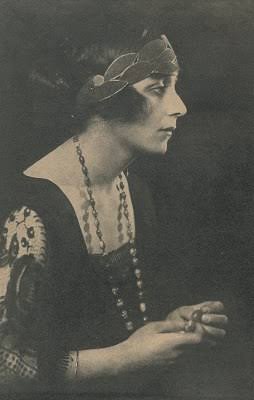
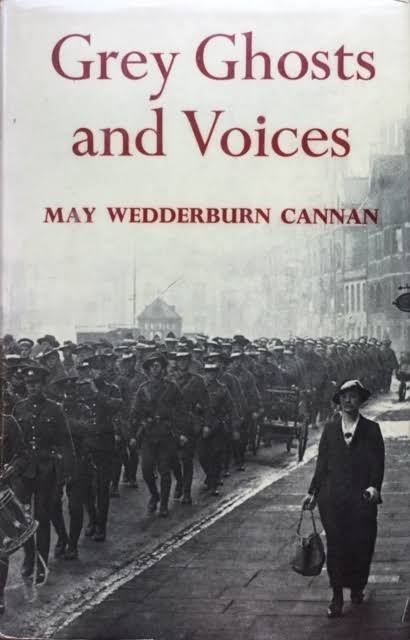
At Oxford, one such work was written by the poet May Wedderburn Cannan (1893-1973). Grey Ghosts and Voices recalls her memories from early in the twentieth century, but it wasn’t published until after her death (Roundwood Press, 1976). Still little-known, the book is a telling record of upper-middle class life before and after 1914. It records mourning a fiancé lost in the cruel influenza pandemic which followed the Armistice, as well as her being among the “surplus two millions” of women left without work or a supportive partner as Britain edged into the 1920s. Headlines began to celebrate party-going and the “Bright Young Things” yet May felt nothing but disdain and distance from this new and supposedly carefree world. She found herself crammed with jagged memories while others seemed only too keen to drink and joke, and to forget. Grey Ghosts is proof that she was incapable of betraying her own past.
May was the daughter of OUP’s Secretary (Chief Executive) Charles Cannan, and her book conjures up the dances and the social life she enjoyed in Oxford during the so-called “golden summer” of 1914. With the outbreak of war, she and her sisters started to help their father with paperwork at the Press, their coats hanging on three nails driven into his office wall. The city outside felt increasingly haunted. Newsboys roamed the twilight with evening papers carrying lists of latest casualties, and the sound of troops singing at the railway station as they departed for France could be heard on the evening wind.
Later, May came face to face with the survivors, when she volunteered as a nurse in Oxford and northern Europe. All this inflicted deep and lasting scars: today, May would surely be diagnosed with profound trauma. She wrote that after news of the terrible battle at Mons it was impossible “to ever be the same again. I remember … being quite unable to speak.” It took over half a century for her to find words that captured her remembrance of those days, and to fix the grief and the shock that were entwined about them on the printed page.
May’s work retains its power, and Grey Ghosts is a book long overdue for rediscovery. “History makes strange reading sometimes,” she observed – but her acute writing brings it to life and makes personal memory a shared, and unforgettable, experience.